
Visa and immigration for medical tourists in the Philippines: what you need to know in 2026
Ninoy Aquino International Airport is not where you want to discover that your visa expires before your stitches come out. Yet this is exactly what happens to dozens of medical tourists every month — they arrive on a 30-day visa-free entry, book a surgical package that requires six weeks of recovery, and somewhere around day 28 realise that their legal right to remain in the country is about to lapse while their surgeon has not yet cleared them to fly. The Philippines is one of the most accessible medical tourism destinations in Asia precisely because its visa policy is generous: citizens of over 150 countries can enter without a pre-arranged visa. But "accessible" and "unlimited" are not the same thing, and the gap between the length of stay you are granted on arrival and the length of stay your treatment actually requires is where immigration trouble begins. In 2026, the Philippine Bureau of Immigration has tightened enforcement of overstay penalties, introduced digital tracking systems for foreign nationals and clarified the rules around medical extensions — making it more important than ever to understand the framework before you board the plane, not after you land.
Visa-free entry: who qualifies and for how long
The Philippines operates a visa-free entry policy for citizens of 150-plus countries, and this is the pathway that the vast majority of medical tourists use. The length of the visa-free stay depends on your nationality, and the differences are significant enough to determine whether you need to plan an extension at all.
Citizens of the United States, the United Kingdom, Canada, Australia, New Zealand, most European Union member states, Japan, South Korea and several other countries are granted 30 days of visa-free entry upon arrival. This 30-day period is calculated from the date of arrival, not from the date you clear immigration — meaning the clock starts the moment your plane touches Philippine soil. Citizens of Brazil and Israel receive 59 days. Citizens of Singapore and Malaysia receive 30 days. A smaller group of nationalities, including citizens of India, China, Nigeria and several African and South Asian nations, are not eligible for visa-free entry and must obtain a visa from a Philippine embassy or consulate before travelling.
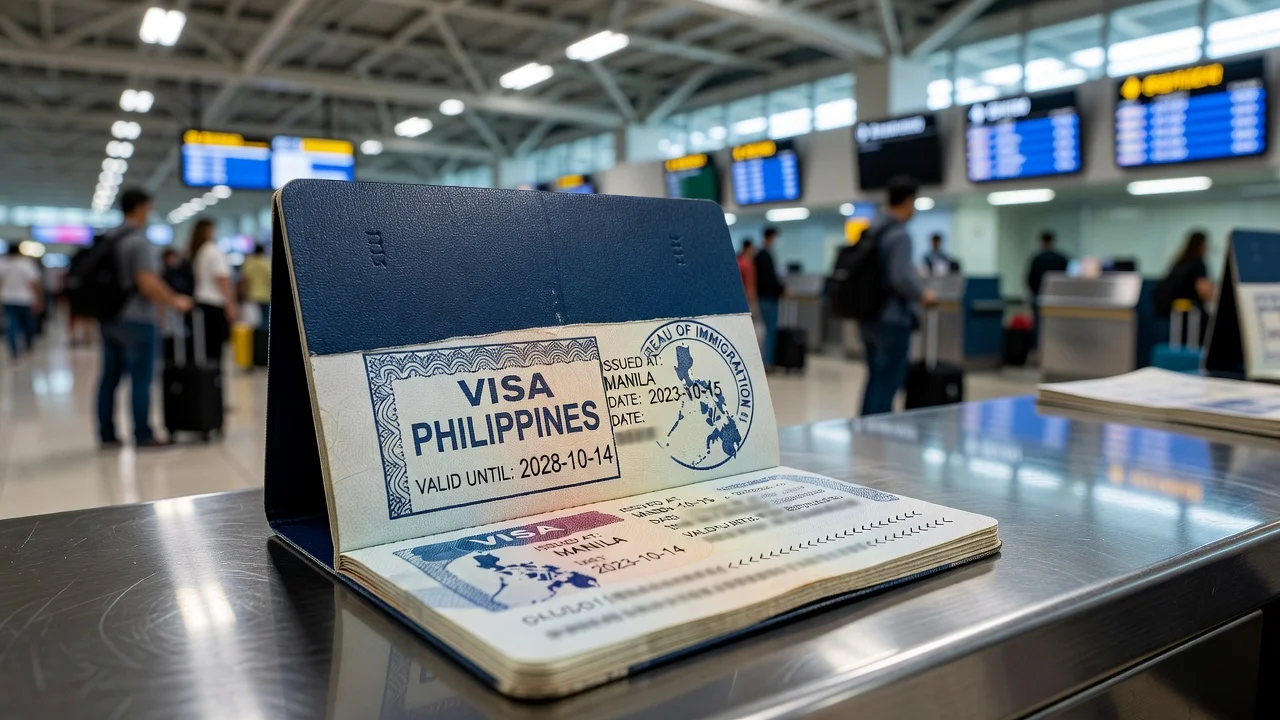
The visa-free entry is issued as a stamp in your passport by the immigration officer at the airport. There is no application form, no fee and no pre-registration. You present your passport, return ticket and proof of accommodation, and the officer grants the entry period. The simplicity is deliberate — the Philippine government has positioned visa-free entry as a competitive advantage in the medical tourism market, making it easier to travel to Manila for surgery than to Bangkok or Seoul, where visa requirements are marginally more complex for some nationalities.
When 30 days is not enough: medical visa extensions
Thirty days sounds like enough time until you account for the realities of surgical recovery. A rhinoplasty may require 7 to 10 days of in-country recovery. A facelift may require 14 to 21 days. Breast augmentation with a complex recovery may require 21 to 28 days. Add pre-operative consultation days, potential delays in scheduling and the surgeon's preference for a final follow-up before clearing you to fly, and a 30-day window can evaporate before you are medically ready to leave.
The Philippine Bureau of Immigration allows visa-free entrants to extend their stay through the Visa Waiver program. The first extension grants an additional 29 days (bringing the total to 59), and subsequent extensions can be obtained in 59-day increments up to a maximum of one year. Extensions are processed at Bureau of Immigration offices in Manila, Cebu and other major cities, and some clinics and medical tourism facilitators offer extension assistance as part of their service packages.
The extension process requires your passport, a completed application form, proof of financial capacity to support your extended stay and payment of extension fees. The fees are tiered: the first 59-day extension costs approximately 3,530 Philippine pesos (roughly $60), with additional fees for each subsequent extension. Express processing is available for an additional charge and is recommended for medical tourists who need to extend quickly before their current visa period expires.
Special visas for longer medical stays
For medical tourists whose treatment plan exceeds the visa-free and extension periods, or whose treatment involves multiple stages spread over several months, the Philippines offers specific visa categories that provide longer-term legal residence. These are less commonly used than visa-free entry with extensions, but they are important for patients undergoing complex, staged or long-term treatment.
The Special Visitor Visa for Medical Treatment is the most directly relevant category. It is not a separate visa but a designation applied to a regular visitor visa that allows an initial stay of up to 59 days, with extensions granted specifically on the basis of ongoing medical treatment. To qualify, you must provide a letter from a Philippine-licensed physician or hospital stating the nature and expected duration of your treatment. The letter must specify the treatment plan, estimated number of days or weeks required and the medical necessity of remaining in the Philippines. This documentation is submitted with the extension application and serves as the justification for exceeding the standard visa-free period.
The Special Resident Retiree's Visa (SRRV) is an option for medical tourists who plan to return to the Philippines repeatedly for ongoing treatment or who wish to combine medical care with an extended stay. The SRRV is a permanent residence visa that does not require periodic renewal, and it allows unlimited entry and exit. The financial requirements vary by age and deposit type — applicants over 50 can qualify with a time deposit of $10,000 to $20,000, depending on whether they receive a pension. While the SRRV was designed for retirees, it is increasingly used by medical tourists who find that the convenience of a permanent visa outweighs the deposit requirement, particularly for patients planning multiple surgeries over several years.
Required documents at the border: what immigration officers look for
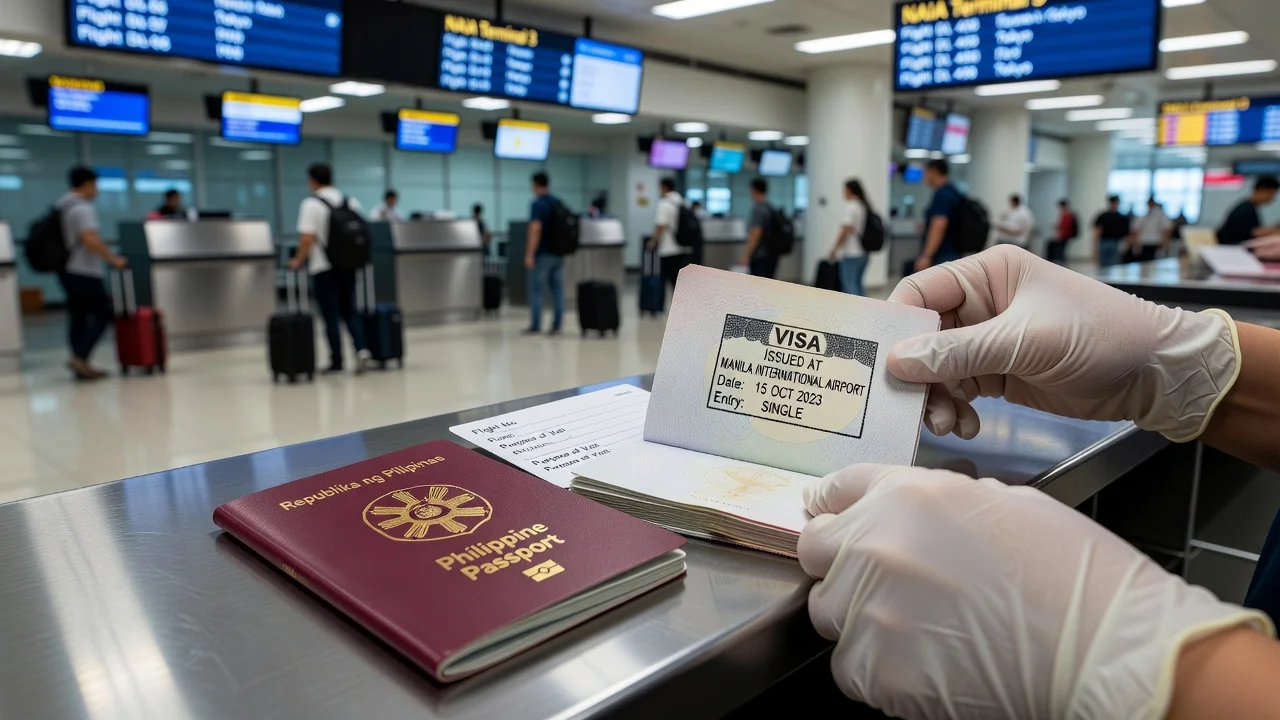
The immigration officer at Ninoy Aquino International Airport has broad discretion to grant or deny entry, and medical tourists are subject to the same scrutiny as any other visitor. The officer's primary concern is that you intend to leave the country within your authorised stay and that you have the means to support yourself without working illegally. For medical tourists, this means carrying specific documents that explain the purpose and duration of your visit.
Being prepared with the right documents prevents the most common border issue for medical tourists — being questioned about the purpose of a long stay without a return ticket booked within 30 days. The following documents should be carried in your hand luggage, not checked baggage, and presented proactively if questioned.
Documents to carry for immigration at Manila airport:
- Passport valid for at least six months beyond your planned departure date — this is a strict requirement. Passports with less than six months' validity will be denied boarding by your airline before you even reach Manila.
- Return or onward flight ticket — immigration officers verify that you have a booked departure within your authorised stay. If your treatment may require an extension, book a return ticket within the 30-day window and change the date after arrival once your extension is granted. A fully refundable or flexible fare is the most practical approach.
- Letter from your treating clinic or hospital — a printed letter on clinic letterhead stating your name, passport number, planned procedure, treatment dates and expected duration of stay. This document directly answers the officer's question about why you are staying longer than a typical tourist.
- Proof of accommodation — a hotel booking confirmation, clinic-provided accommodation letter or apartment rental agreement for the duration of your stay. If your clinic provides recovery accommodation, their letter should state this.
- Proof of financial capacity — recent bank statements showing sufficient funds to cover your treatment, accommodation and living expenses. The amount is not specified, but immigration officers generally look for evidence of at least $50 to $100 per day of stay, plus the cost of treatment, which should be covered by savings, insurance or a pre-paid treatment package.
- Travel insurance or medical complication insurance documentation — while not mandatory for entry, having proof of insurance that covers medical complications during your stay signals that you are a prepared, responsible visitor and reduces the likelihood of extended questioning.
- Visa if required by your nationality — citizens of countries not eligible for visa-free entry must obtain a visitor visa from a Philippine embassy or consulate before travelling. The visa is typically granted for 59 days and can be extended in-country.
- Medical records relevant to your treatment — if you are travelling for treatment of a pre-existing condition, carry a summary of your medical history, current medications and any imaging or test results that your Philippine surgeon has requested. These are not immigration documents, but they support the purpose of your visit if questioned.
Having these documents organised and accessible transforms a potentially stressful immigration interview into a routine process. The officer's job is to confirm that you are a legitimate visitor who will leave when your authorised period ends. A medical tourist with a clinic letter, a return ticket and proof of funds answers every question before it is asked.
Overstaying: penalties, consequences and how to regularise
Overstaying a visa in the Philippines is common among medical tourists, and it is almost always unintentional — a delayed recovery, a postponed surgery date, a misunderstanding of the 30-day calculation. But the consequences are real, and they have become more consistently enforced in 2026 with the introduction of the Bureau of Immigration's digital tracking system, which automatically flags overstayers and generates penalty calculations.
The penalty for overstaying is calculated per month or fraction thereof. For the first month of overstay on a visa-free entry, the penalty is approximately 3,530 pesos plus a visa extension fee. For each additional month, the penalty increases. Overstaying by more than six months triggers a requirement to obtain an Exit Clearance Certificate from the Bureau of Immigration before you can leave the country, which adds processing time and additional fees. Overstaying by more than one year can result in being placed on a blacklist that prevents future entry to the Philippines.
The comparison below summarises the key visa and stay options available to medical tourists in the Philippines.
| Visa or stay type | Maximum stay | Eligibility | Extension possible? | Key requirements | Approximate cost |
|---|---|---|---|---|---|
| Visa-free entry (30-day) | 30 days from arrival | Citizens of 150+ countries including US, UK, EU, Canada, Australia | Yes — extendable to 59 days, then in 59-day increments up to 1 year | Valid passport, return ticket, proof of accommodation | Free on arrival |
| Visa-free entry (59-day) | 59 days from arrival | Citizens of Brazil and Israel | Yes — extendable in 59-day increments up to 1 year | Same as above | Free on arrival |
| Pre-arranged visitor visa | 59 days initially | Citizens of countries not eligible for visa-free entry | Yes — extendable in 59-day increments | Application at Philippine embassy, passport, photo, return ticket, fee | $30–$60 visa fee |
| Special Visitor Visa for Medical Treatment | Up to 59 days, extendable on medical grounds | Any nationality with legitimate medical treatment in the Philippines | Yes — extensions granted based on physician letter | Letter from Philippine-licensed physician, proof of funds, extension fees | Extension fees approx. 3,530 pesos per extension |
| Special Resident Retiree's Visa (SRRV) | Permanent, unlimited | Foreign nationals 35+ (some categories 50+) | No — permanent visa | Time deposit $10,000–$20,000, monthly pension or income proof | One-time fee $1,400–$1,500 |
| Tourist visa extension (in-country) | 59 days per extension, up to 1 year total | Any visitor whose initial stay period is expiring | Yes — multiple extensions allowed | Valid passport, application form, proof of funds, fee | 3,530 pesos per first extension; more for subsequent |
The cost column in this overview reveals an important point: the financial cost of visa compliance in the Philippines is low. Extension fees are modest compared to the overall cost of medical treatment, and the SRRV's deposit is refundable. The real cost of non-compliance is not financial — it is the risk of being flagged by immigration, denied future entry or detained at the airport when trying to leave. No patient wants to discover, on the day they are finally cleared to fly home, that they cannot board the plane because their visa expired three weeks ago.
How to apply for a visa extension while in the Philippines
The visa extension process is straightforward but requires patience, particularly if you are recovering from surgery and unable to visit a Bureau of Immigration office in person. The Bureau has offices in Manila (Intramuros), Cebu, Clark, Davao and several other cities, and the process can also be handled through an authorised representative — a clinic staff member, a medical tourism facilitator or a lawyer — if you are physically unable to attend.
The extension application requires your passport, a completed visa waiver application form (available at the Bureau office or downloadable), photocopies of your passport's biography page and arrival stamp, and payment of the applicable fee. Processing time for standard applications is 3 to 5 working days, and express processing (same-day or next-day) is available for an additional fee. If you are applying through a representative, you must provide an authorisation letter signed by you, a copy of your ID and the representative's ID.
Some clinics in Manila offer visa extension assistance as part of their medical tourism packages, assigning a staff member to handle the application on your behalf. This service is valuable because it removes the burden of navigating an unfamiliar bureaucracy while you are recovering from surgery, and it ensures that the extension is filed before your current stay period expires. If your clinic does not offer this service, ask whether they can recommend a facilitator — most established clinics have relationships with local agents who handle immigration matters for international patients.
Digital tracking and what it means for you
The Bureau of Immigration's digital tracking system, fully implemented in 2025 and refined through 2026, has changed the practical landscape for medical tourists. Previously, overstaying was sometimes not detected until departure, and penalties were calculated manually at the airport — a process that was inconsistent and occasionally navigable through negotiation. The new system automatically tracks entry and exit dates, flags overstayers in real time and generates penalty calculations that are enforced uniformly.
For compliant medical tourists, the system is beneficial — it makes extension applications faster, because the Bureau has immediate access to your entry records and does not need to manually verify your arrival date. It also reduces the likelihood of arbitrary or inconsistent treatment by individual officers, since the system enforces rules uniformly. The risk is for those who overstay without regularising: the system makes detection certain, and the penalties are no longer negotiable.
The practical implication is that you should track your visa expiry date from the moment you arrive. Write it on a card in your wallet, set a phone reminder for 10 days before expiry and begin the extension process at least two weeks before your current stay ends. This buffer gives the Bureau time to process the application and gives you time to gather any additional documents required.
Travelling with a companion: their visa situation
Many medical tourists travel with a companion — a partner, family member or friend who provides post-operative care and emotional support. The companion's visa situation is straightforward but worth noting: they enter under the same visa-free or visa-required framework as the patient, based on their nationality. A companion from a visa-free country receives the same 30-day entry as the patient and can apply for the same extensions on the same timeline.
If the companion needs to leave the Philippines and return during the patient's recovery — for example, to return to work and come back for the patient's departure — they must obtain a new visa-free entry or visitor visa for the return trip. Multiple-entry visas are available from Philippine embassies for nationals of countries that require pre-arranged visas, and these allow multiple entries within the visa validity period. For visa-free nationals, re-entry is as simple as presenting at the border again, but the 30-day clock restarts from the new arrival date.
Common mistakes and how to avoid them
The immigration issues that medical tourists encounter in the Philippines are predictable and almost entirely preventable with advance planning. The most common mistakes are not exotic legal problems — they are simple oversights that compound into serious inconveniences when discovered at the wrong moment.
Frequent immigration mistakes made by medical tourists and how to prevent each one:
- Booking a return flight beyond the 30-day visa-free period — airlines may deny boarding if your return ticket exceeds your authorised stay, because the airline is liable for repatriation if you are denied entry. Book a flexible return within 30 days and change the date after extending your visa.
- Assuming the 30-day period starts from the date of your first clinic appointment — it starts from the date of arrival. If you arrive five days before your surgery, those five days count against your 30-day total, leaving you 25 days for recovery and follow-up.
- Failing to extend before the current stay expires — extensions must be filed before the current authorised period ends. Filing after expiry triggers overstay penalties, even if the delay is only one day. Set a reminder for two weeks before expiry and begin the process immediately.
- Not carrying a clinic letter at the border — without documentation explaining the purpose and duration of your stay, a medical tourist arriving for a six-week surgical recovery may be questioned extensively or denied entry. A printed clinic letter answering the officer's questions before they are asked is the simplest protection.
- Losing your passport while in the Philippines — replacing a lost passport in a foreign country takes days to weeks and complicates every aspect of your stay, including visa extensions. Keep your passport in a secure location and carry a photocopy separately. Register your presence with your embassy through their online traveller registration system.
- Assuming your medical tourism facilitator handles immigration — some do, some do not. Clarify before you travel whether visa assistance is included in your package. If it is not, you are responsible for your own compliance, and ignorance of the rules is not a defence.
- Confusing the visa-free period with the extension limit — the 30-day visa-free entry can be extended to a maximum of one year, but the one-year limit is absolute. If your treatment requires more than one year of continuous stay, you need a different visa category, such as the SRRV, or you must leave and re-enter to reset the clock.
- Overlooking the six-month passport validity rule — your passport must be valid for at least six months from your arrival date. A passport expiring in four months will result in denial of boarding by your airline. Check your passport expiry before booking your flight.
Each of these mistakes is avoidable with a checklist, a calendar and a basic understanding of how the Philippine immigration system works. The system is not adversarial — it is administrative, and it rewards preparation. The medical tourist who arrives with the right documents, tracks their visa expiry date and extends before the deadline passes will move through the process without friction. The one who does not will spend part of their recovery dealing with a bureaucracy that has no interest in the fact that they are healing from surgery and every interest in the fact that their visa has expired.
Planning your timeline: a practical framework
The most effective way to manage immigration as a medical tourist in the Philippines is to build a timeline before you travel that accounts for every phase — arrival, pre-operative consultation, surgery, recovery, follow-up and departure — and maps each phase against your visa period. A typical timeline for a moderately complex procedure might look like this: arrive 3 days before surgery for consultation and pre-operative testing, undergo surgery, recover in-country for 14 to 21 days, attend a final follow-up, and depart. Total in-country time: 17 to 24 days, which fits within the 30-day visa-free period with a small buffer.
For longer procedures requiring 30 to 45 days of recovery, the timeline exceeds the visa-free period. In this case, plan to apply for an extension on day 20 — early enough to process before day 30, with buffer for delays. For procedures requiring multiple stages over several months, consider the SRRV or plan multiple trips with re-entry between stages, which resets the visa-free clock each time.
The Philippine immigration system is one of the most accessible in Asia for medical tourists, and the 2026 reforms have made it more predictable, not less. The rules are clear, the fees are modest and the extensions are available. The patients who encounter problems are not the ones who followed the rules and found them inadequate — they are the ones who did not check the rules at all and discovered, at the airport or the Bureau of Immigration office, that preparation was not optional. Build your timeline, carry your documents, track your dates and the immigration dimension of your medical trip becomes what it should be: a minor administrative detail, not a crisis.